
PC Store Together Co-op Guide: Playing With Up to 4 Players
How PC Store Together co-op works: host a shop for up to four players, split build and repair roles, share stock and avoid version-mismatch join failures.
Quick answer: One player hosts the shop and up to three others join online. Split the work by bench, not by walking over each other: one builds, one repairs, one handles stock and checkout. Everyone needs the same game version to join.
Official source: PC Store Together on Steam ↗
PC Store Together is a single-player shop sim with online co-op for up to four. The shop is shared: one balance, one reputation, one stock room. That makes role division more important than in a game where each player has their own save. This page covers the setup and the division of labour. For the interface, see the controls guide→.
Hosting and joining
- Host: the player who owns the shop and starts the session.
- Guests: up to three players who join the host's shop.
- Version: everyone should be on the same build. A mismatch blocks the join.
The game shows the version in the main menu. If a friend cannot join, compare versions before troubleshooting the network. A launch patch added explicit messages for the host and the guest when one is outdated.
The role split that works
Builder
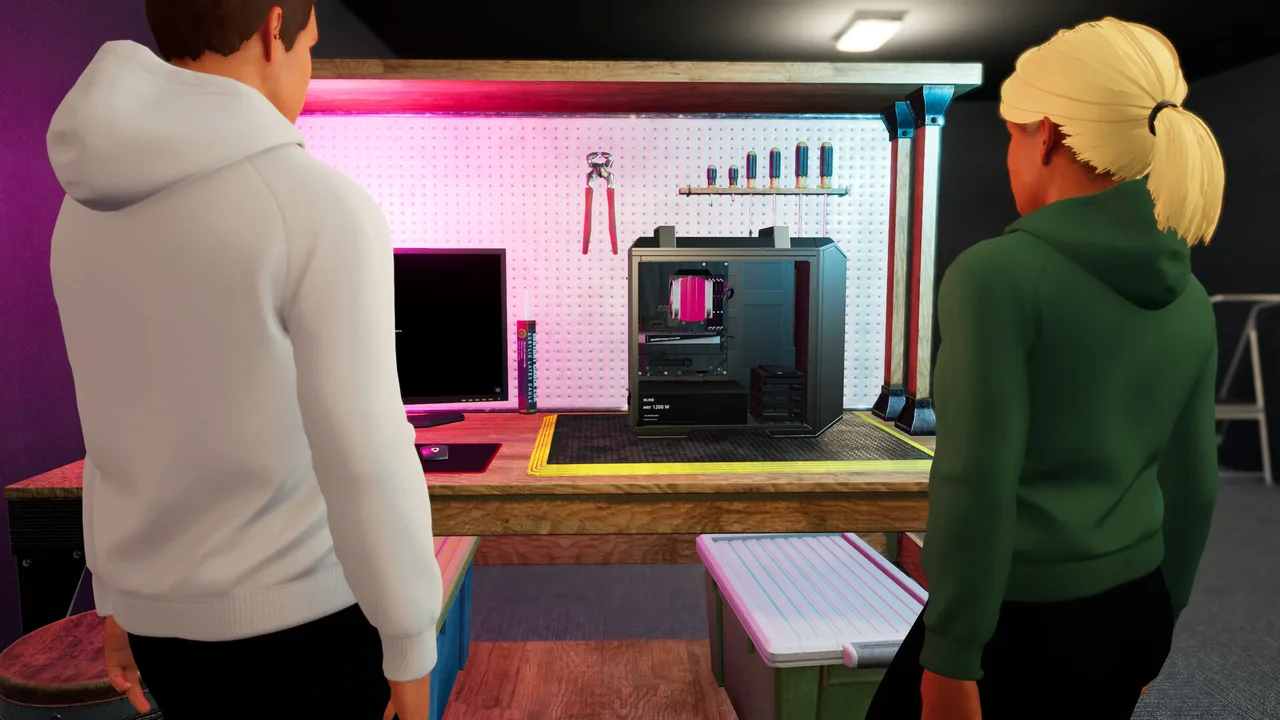
Owns the bench. Takes the custom build from parts to load test. Does not stop to answer the counter. The builder still runs the same compatibility checks→ as a solo player, so a second pair of eyes on the build sheet helps.
Diagnostician
Owns the repair queue. Runs the symptom path, tests parts and closes tickets.
Stock and counter
Orders parts, stocks shelves, handles checkout and keeps the display area clean. This role looks passive and is the one that keeps the other two from stopping.
Floater
Covers deliveries, customer handovers and the second bench. In a two-player shop, the floater is also the builder.
Shared resources, shared decisions
Everyone spends from the same balance. Agree on the rules before the first big purchase:
- Who can buy parts without asking?
- How much cash stays in the buffer?
- Who prices a build?
- Who ends the day?
A co-op shop with four players making independent purchases runs out of cash quickly. A short rule set prevents most arguments.
Ending the day
Any player can end the day, not just the host. That is convenient and easy to abuse. End the day when:
- The bench is clear.
- The open tickets are waiting on collection, not on work.
- Everyone has finished their current job.
If one player is mid-build, ending the day can leave the machine half-finished.
Version mismatch and connection issues
A launch hotfix added version messages:
- The host sees that a guest is on an outdated version.
- The guest sees that they are the one who needs to update.
If the join fails, both players should restart the game and check for an update. The game also fixed an "Unable to connect" case in the Automatic region, so a region change is worth trying after the version check.
Co-op and progression
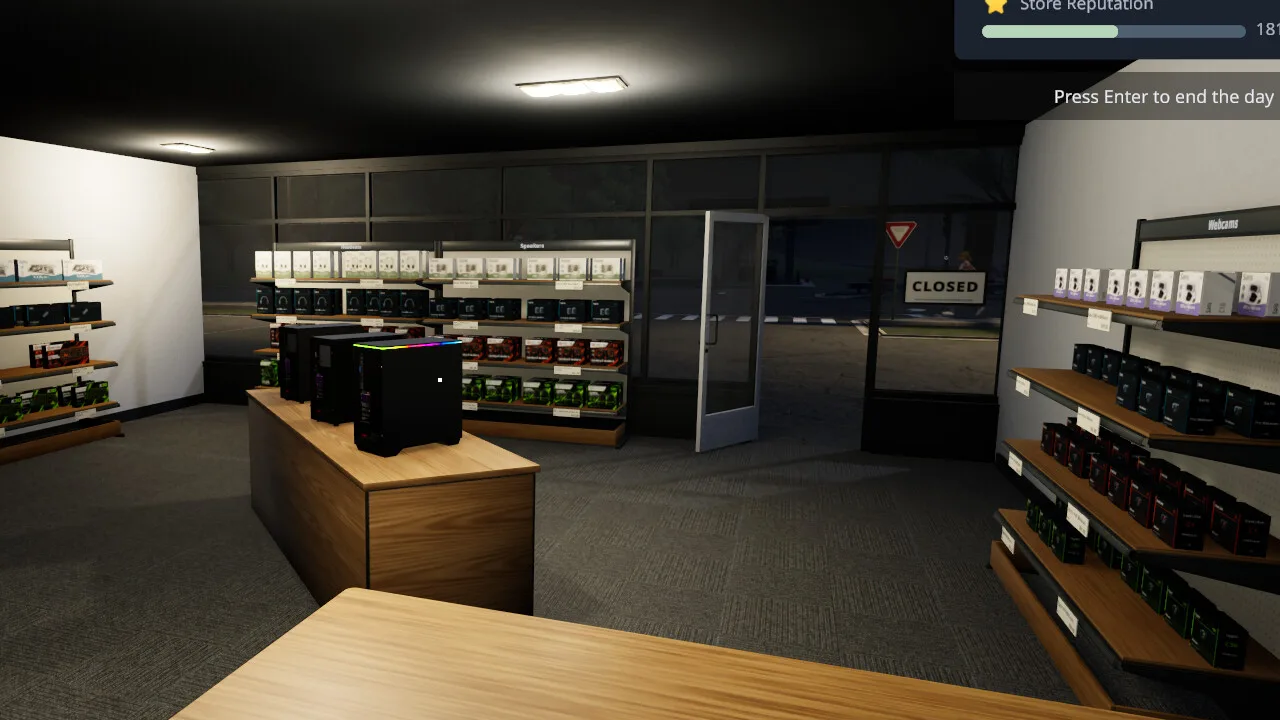
The shop progresses once, for everyone. Reputation, licences and upgrades are shared. That makes co-op faster for big builds and slower for individual progression if the group disagrees on spending.
Each player also has a personal PC in the 1.0 update. Upgrading it is a separate project from the shop; decide whether the group funds those upgrades or each player funds their own.
A four-player shop can empty its balance in four clicks. Set a spending rule on day one.
FAQ
How many players can join? Up to four total, including the host.
Does co-op need a separate save? No. Guests join the host's shop and share its progression.
Why can't my friend join? Check the game version first. A host and guest on different builds cannot connect.
Can a guest end the day? Yes. Any player can end the day, so agree on when it is safe.
Sources and further reading
- PC Store Together on Steam ↗ — co-op features.
- PC Store Together news hub ↗ — co-op and version fixes.
- Sykes Games ↗ — developer site.
- PC Store Together on SteamDB ↗ — update history.